
Only burgers and fries? Not at all: the way Americans eat is changing, and restaurants and supermarkets now offer a wider, more complete choice.
You are thinking of living in the United States for a year, and it’s natural to wonder about the food too. So, what do people eat in the United States? Is it just burgers and fries? What about pasta? And pizza? You will soon notice that Americans prefer meat and bread to fruit and vegetables: no Mediterranean diet, in short! But in American supermarkets you can find almost all the food you are used to eating in Italy, and when you get the chance to eat at home, you can cook pasta, meat and vegetables the Italian way!
And pizza? You will find it almost everywhere, but it isn’t the same as the pizza you eat in Italy. Our general advice is to fit into your new surroundings at the table too. Try the local cooking and taste everything, but keep in mind the diet you are used to and make sure you eat plenty of fruit and vegetables. Be ready to put on a few kilos (you’ll know how to lose them when you get home!).
Let’s make a list of the pros and cons: then, when you come back, you can tell us about your own experience.
When you go shopping
- Supermarkets are not all the same, just as in Italy. What usually strikes Italians is the size of the packs: you can find whole fridges full of bacon, two-kilo packs of butter and boxes of cereal as big as sacks of food for large dogs; you will see milk and orange juice in five-litre bottles.
- Americans eat more meat and bread than fruit and vegetables. That doesn’t mean there is only junk food in the United States. On the contrary, you’ll find supermarkets well stocked with fruit and vegetables, organic ones too, and vitality bowls are becoming fashionable (try them!).
When you eat out
- Everything is bigger in the United States: the roads, the houses, the cars. The same goes for restaurants and diners: portions are far larger than ours. Better to order one dish at a time.
- When you order, be ready for a barrage of questions about how you’d like your meat cooked and which side you want…
- …don’t forget the tip…
- …and watch the closing times, because people don’t have dinner as late as we do.
- The traditional breakfast is sausage, eggs and bacon, but today many Americans have milk and cereal. Then there are muffins, doughnuts, pancakes to try with maple syrup, fruit or chocolate, waffles with honey… What you will rarely find is tea or espresso: tea is not very common, and American coffee will seem long and watery compared with ours.
What you can’t miss
Find out which dishes are typical of your area (Kentucky fried chicken, for example, or fried green tomatoes, or smoked salmon) and don’t miss your first chance to try:
- Barbecue. You’ll see there’s one at every house, just as there was a moka pot in every Italian home before coffee machines came along. Barbecue is an institution in American families, a ritual, a way of cooking handed down over the years that sometimes takes hours and hours of smoking: not to be confused with meat grilled over an open flame.
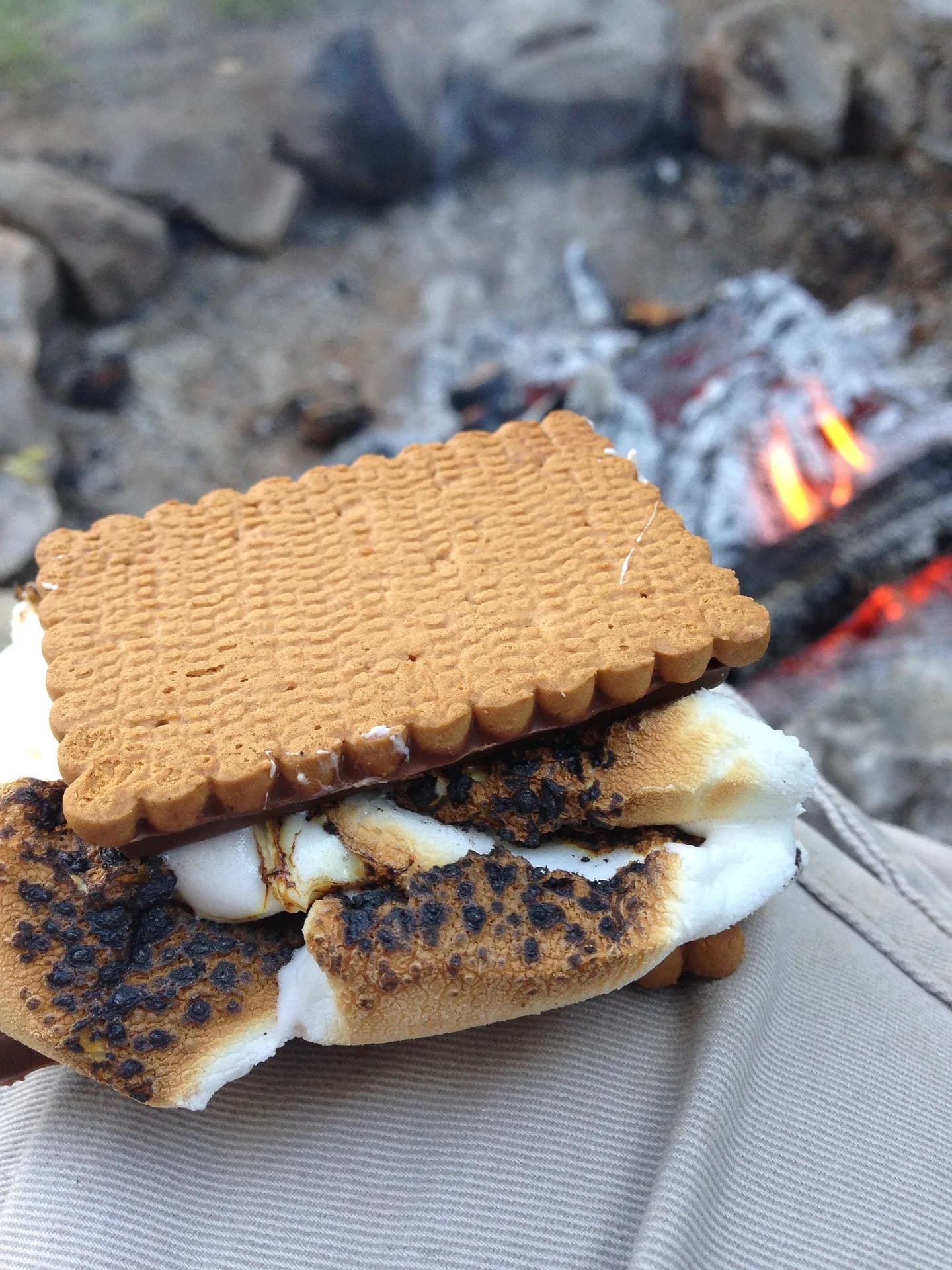
- Marshmallows. Where there’s a barbecue, there are marshmallows toasted over the fire. They are usually stuck on the end of a whittled stick. You can eat them on their own or use them to make s’mores.
- Hot dogs. In New York, try a hot dog with frankfurter and sauerkraut at least once, bought and eaten on the street, of course.
At the table with your host family
Perhaps you are reading this article because you have decided to spend your school year abroad in the United States and you want to know what to expect. We will give you all the information you need during the preparation course, but your host family is also getting ready to welcome you, in its own way. They will all be curious to meet you, they will want to know how you live in Italy, and they will be happy to indulge all your “culinary” wishes. Make a list of what you absolutely want to try, and when you come back you can tell us what you thought.
To return the favour, you could suggest to your host family that you hold an Italian day every now and then, and offer to cook from our recipes (and above all, with our cooking times!).
Keep exploring
Find an experience that fits you
School abroad, volunteering or a short program — your next chapter starts with a conversation.
See the programs