
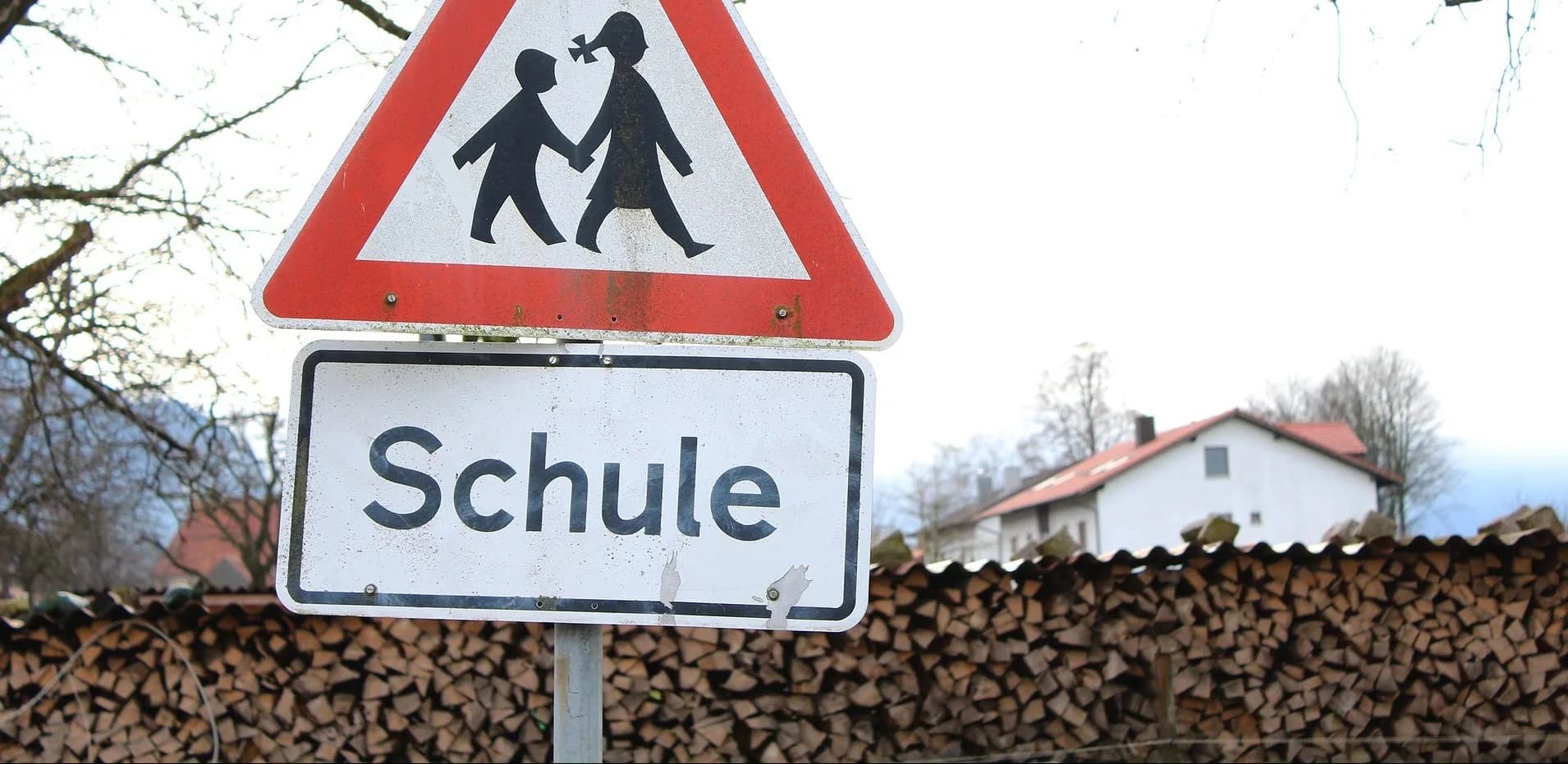
For Italian students, studying in Germany also means learning to choose their own courses, and so gaining an independence they will treasure when they return to Italy.
In Germany compulsory schooling starts at 6 and ends at 15 or 16, depending on the state (the Länder or Bundesländer, the federal states). Germany is a federal republic made up of sixteen states, each of which runs its own education and school system, private schools included.
After the Kinderkrippe (up to age three) and the Kindergarten, children go to the Grundschule, the equivalent of our primary school, where they learn to read and write and then study arithmetic, art, music, sport, religion and natural and social sciences. They also study a foreign language, usually English.
There is no final exam, but teachers give an assessment of each pupil: it isn’t binding, but it still influences the family’s next choice.
Choosing a secondary school
In Italy, after primary school, children move on to middle school, which, despite different specialisations, has a common curriculum. In Germany, by contrast, pupils and their families already have to choose one of three types of secondary school.
- Hauptschule (comparable to our vocational schools). It gives students a basic education and offers various tracks depending on the trade they want to go into. At the end of the ninth year students obtain the Hauptschulabschluss, the Hauptschule leaving certificate.
- Realschule, similar to our technical schools. It lasts between 4 and 6 years and offers a broader range of subjects than the Hauptschule. The Realschule diploma is the minimum level for entering skilled professions. Graduates with excellent marks can move on to the Gymnasium.
- Gymnasium, the school attended by the strongest students, which prepares them for university. Today, alongside literary subjects as in the past, it increasingly offers economics subjects, for practical and professional needs. This is where students really experience and develop their independence, because the curriculum is organised into courses that each student must choose (apart from some compulsory subjects) and attend, as at university. At the end of the Gymnasium students sit the Abitur, the final exam for the Allgemeine Hochschulreife, the qualification that allows them to enrol at university.
In practice, German pupils face a choice that can shape their future at the age of only 9 or 10. In reality, though, throughout the first two years, which are common to all three types of school, they can still change.
Today some states also have a newer type of school, the Gesamtschule, which offers courses at different levels in each subject. Depending on their results, students can obtain the Hauptschule or Realschule diploma, or go on to the school-leaving exam.
Where does an Italian exchange student fit into this system?
Foreign students who want to study in Germany are placed in a Gymnasium and, more rarely, in a Realschule, which provide an academic, multidisciplinary education. The big novelty they find in German schools, compared with Italian ones, is the chance to study new subjects and, above all, to use new methods of study and learning. Experience tells us that encountering school systems different from the Italian one is always positive for students. At school they study and make friends, and take part in sports, cultural and recreational activities. They acquire a new approach to study, which they keep, with satisfaction, when they return to Italy.
Watch out for the grades!
German schools use a grading scale that runs the opposite way to ours, from 1 to 6: the highest mark is 1, meaning “excellent”; then come 2 “good”, 3 “fair”, 4 “sufficient”, 5 “insufficient” and 6 “seriously insufficient”. Students who get a 6, seriously insufficient, in two subjects have to repeat the year.
Keep exploring
Find an experience that fits you
School abroad, volunteering or a short program — your next chapter starts with a conversation.
See the programs